A focused dual-grid memory puzzle for short attention training
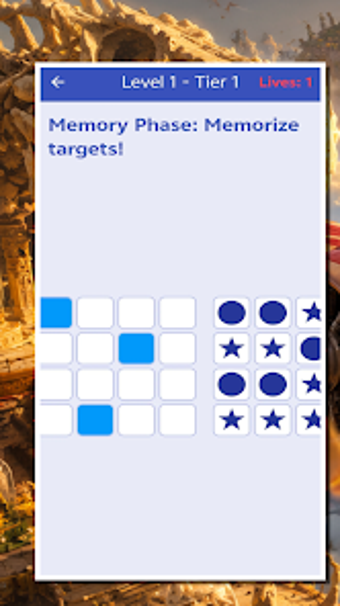
TwinzaPlex, from WrenWren, is an Android educational memory puzzle designed to strengthen divided attention and working memory. Players view highlighted cells on a left grid and star targets on a right grid, then reconstruct both patterns within a strict 20-second reconstruction phase. It offers tiered progression, adaptive timing, local progress tracking, and a minimalist interface to reduce distractions. The app targets casual players and cognitive-training users with short, focused drills, with local streak tracking.
How does this title differ from the developer's other logic games?
The game shifts the developer's logic-suite emphasis toward simultaneous memory work rather than single-stream puzzles. Where titles like CodeCipherSlide or NexloFlip present isolated pattern tasks, this app places two memory tasks side-by-side so the player must hold spatial highlights and symbolic targets at once. That dual-grid design creates a divided-attention exercise aimed specifically at practicing coordination between spatial layout and symbol positions.
Does the app require internet or include multiplayer play?
The experience is built for solitary, offline sessions: progress is saved locally and consecutive win streaks persist without a connection. The design centers on an individual rhythm of study and repetition, not on competitive matches or online leaderboards. Local saving supports short practice sessions on mobile, letting players resume a focused run without connectivity or cloud sync interrupting the flow.
What does the game look and feel like during a session?
The visual approach is deliberately spare, featuring a clean, minimalist interface that aims to remove visual clutter and keep attention on the grids. The package is small, aboutMB, which favors quick installs on Android devices. The presentation supports concentration rather than spectacle, so players encounter a distraction-reduced screen where layout clarity and pacing take precedence over decorative audio-visual elements.
How steep is the learning curve and what motivates replay?
The reconstruction window creates an immediate cognitive demand: after the memorization phase the player has a strict 20 seconds to recreate both patterns, which intensifies basic drills. Memorization windows tighten as difficulty rises, shaping a short-session learning curve that rewards repeated attempts and incremental improvement. Replay value rests on mastering divided attention and maintaining streaks rather than unlocking narrative content or varied puzzle types.
In summary, the app is a targeted training tool with a narrow focus
The app is a disciplined choice for players who want concentrated, short memory drills and measurable streak-based practice; it suits casual mobile users and those specifically training working memory and divided attention. It is less appropriate for players seeking social competition, expansive puzzle variety, or narrative progression. For anyone after brief, repeatable cognitive exercises, it offers a compact, disciplined experience.